28 January 2026 · 7 min read · By Mark Laursen
We Were Live Streaming Before Twitch Existed
In early 2008, my guild Nihilum partnered with Xfire and Dyyno to do something that barely had a name yet: live stream a video game to an audience over the internet. We were going to broadcast our World of Warcraft raids, world-first progression attempts, live, to anyone who wanted to watch.
This was years before Justin.tv pivoted to become Twitch. Years before “streamer” was a career. Years before OBS existed. We were duct-taping together technology from three different companies because no single product could do what we wanted.
How the Partnership Came Together
Xfire was a gaming social network (think Discord before Discord existed). At its peak it had tens of millions of registered users who used it to see what their friends were playing, chat, and join games together. Dyyno was a small startup building peer-to-peer live video distribution technology. Their product let you broadcast video through a browser plugin, which in 2008 was cutting-edge.
Nihilum was us: the top-ranked World of Warcraft guild in the world at the time, operating under the Mousesports esports organization. We had just come off a streak of world-first raid kills that had made us one of the most-watched guilds in the game. The audience already existed. What didn’t exist was a way to let them watch live.
The pitch was straightforward: Xfire had the gaming audience and the platform. Dyyno had the streaming technology. We had the content that people actually wanted to see. Three companies, three capabilities, one experiment.
What Happened During the First Broadcast?
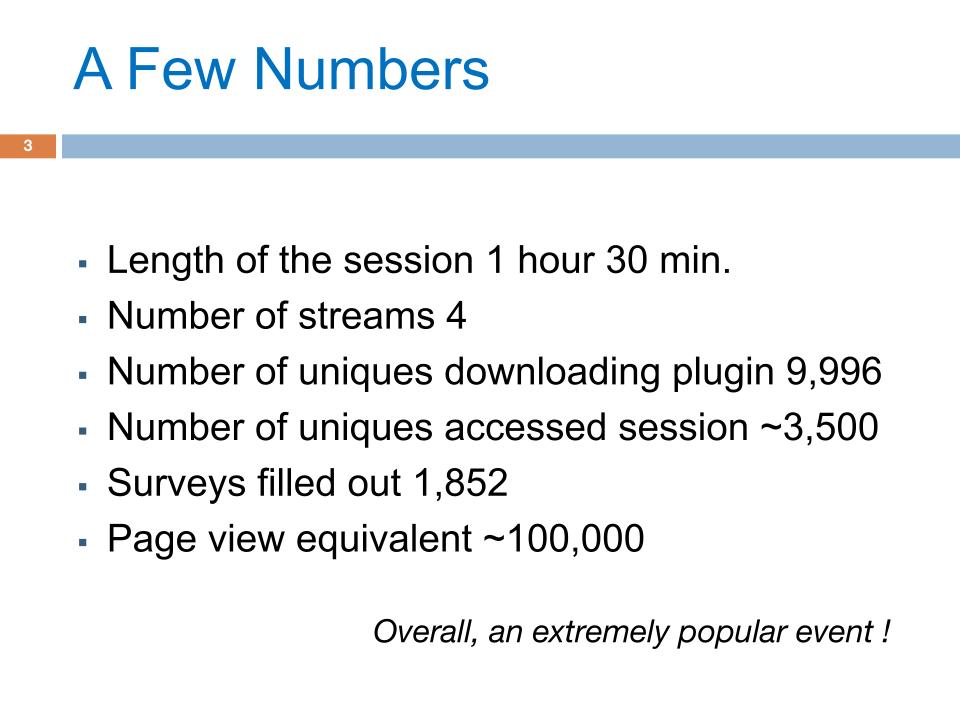
Our first major session in May 2008 ran for 90 minutes across four simultaneous streams. Nearly 10,000 unique users downloaded the Dyyno plugin just to watch. Around 3,500 of them actually got into the session. We sent out surveys afterward; 1,852 people filled them out, which is an extraordinary response rate for 2008. The page view equivalent hit roughly 100,000.
88% of the people who managed to watch rated the experience positively. That number surprised us, because we knew how rough the experience was on our end.
How Live Streaming Worked in 2008 (Before OBS Existed)
There was no OBS. No Streamlabs. No “click start streaming” button. Viewers had to download and install a Dyyno browser plugin before they could watch anything, and only 57% of them described the install process as “easy.” Firefox crashed constantly. Some sessions had no audio at all because Dyyno’s stereomix selection had to be configured manually on each player’s machine. If you got it wrong, your stream was silent and you had no idea until someone told you.
Twenty-five minutes into the first broadcast, Dyyno had to scramble to add more server capacity because the plugin download traffic overwhelmed them. There was no CDN to fall back on. There was no fallback at all. People who couldn’t get in just saw nothing: no error message, no queue, no “stream is full” notification. One of the key takeaways from our post-broadcast debrief was simply “inadequate messaging: clarify the site experience (session on/off/full).” We hadn’t even thought about that because nobody had done this before.
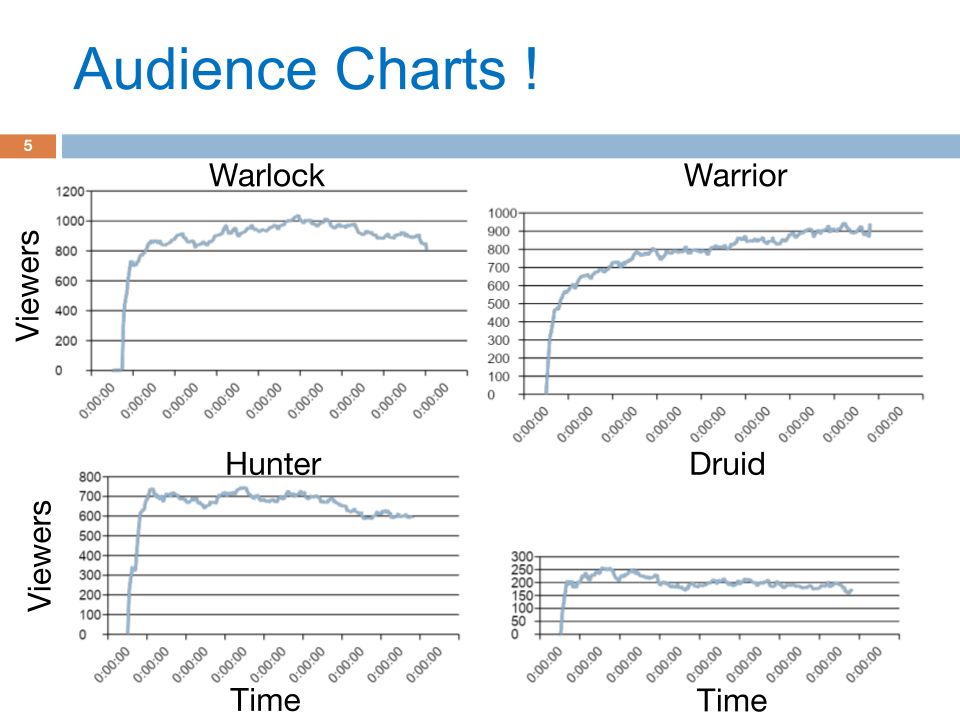
We ran four streams simultaneously, one for each class perspective. Warlock, Warrior, Hunter, Druid. Each stream was a different player’s point of view into the same raid. The idea was that viewers could pick the role they were most interested in and watch from that angle. Multi-POV streaming is common now. In 2008, it was an experiment that nobody had tried at scale.
How Did We Scale to 2,800 Concurrent Viewers?
A month later, we ran a second broadcast. This time we pushed it to four hours, more than double the length of the first session. The numbers jumped significantly: 8,066 unique viewers accessed the session, up from 3,500. We had more than doubled our audience in a single month through nothing but word of mouth and forum posts.
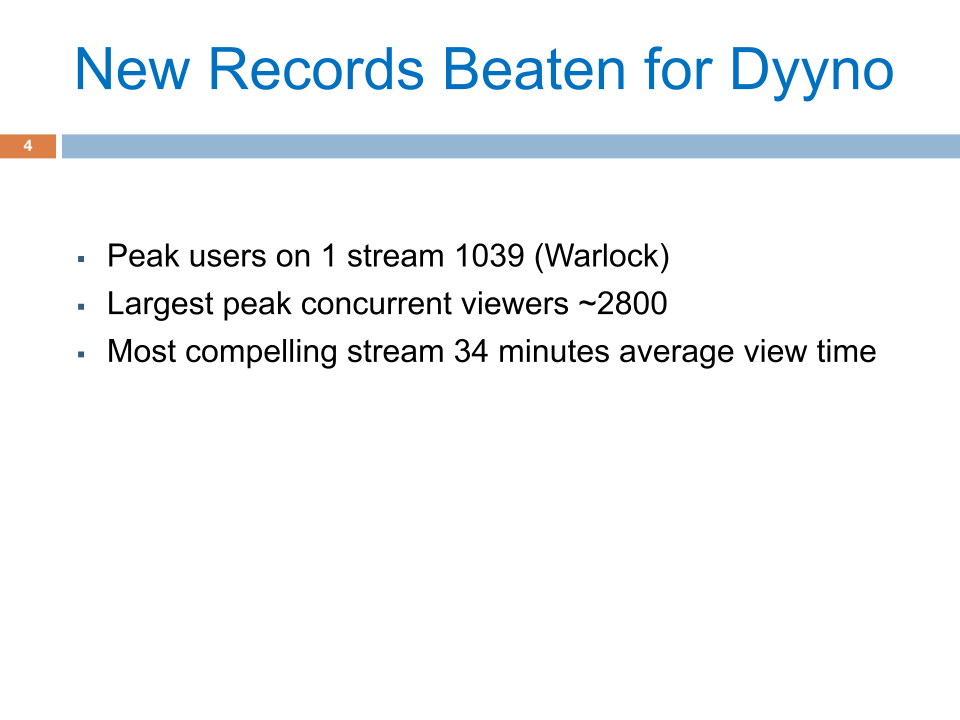
Peak concurrent hit around 2,800 viewers. The Warlock stream alone peaked at 1,039 simultaneous viewers. The Warrior stream sustained close to 900 through most of the session. Even the smallest stream (the Druid perspective) held a steady 200-250 viewers. The most engaged stream averaged 34 minutes of watch time, which meant people weren’t just clicking in to check it out. They were staying for extended boss attempts and raid progression.
Dyyno was breaking their own platform records on our streams. These were the largest concurrent viewer numbers their distribution network had ever handled. For a startup that was still figuring out how to scale peer-to-peer video delivery, our raids were both the best marketing they could ask for and a stress test they hadn’t planned for.
What Went Wrong?
The post-broadcast debrief documents read like a disaster recovery report. Loading problems. Browser crashes, mostly on Firefox. No sound on half the sessions because stereomix had to be manually configured on each player’s machine. Inadequate messaging: viewers had no clear indication of whether a session was live, offline, or at capacity. No stream testing infrastructure existed, so the first time we found out something was broken was when a few thousand people were already watching.
The debrief listed action items that sound obvious today but were genuinely unsolved problems in 2008: “Should have a stream testing site to prepare viewers.” “Dyyno will better automate stereomix selection.” “Predictability is key (session duration, quality expectation, etc.).” We were writing the playbook for live streaming as we went, and every broadcast taught us something that would later become standard practice across the industry.
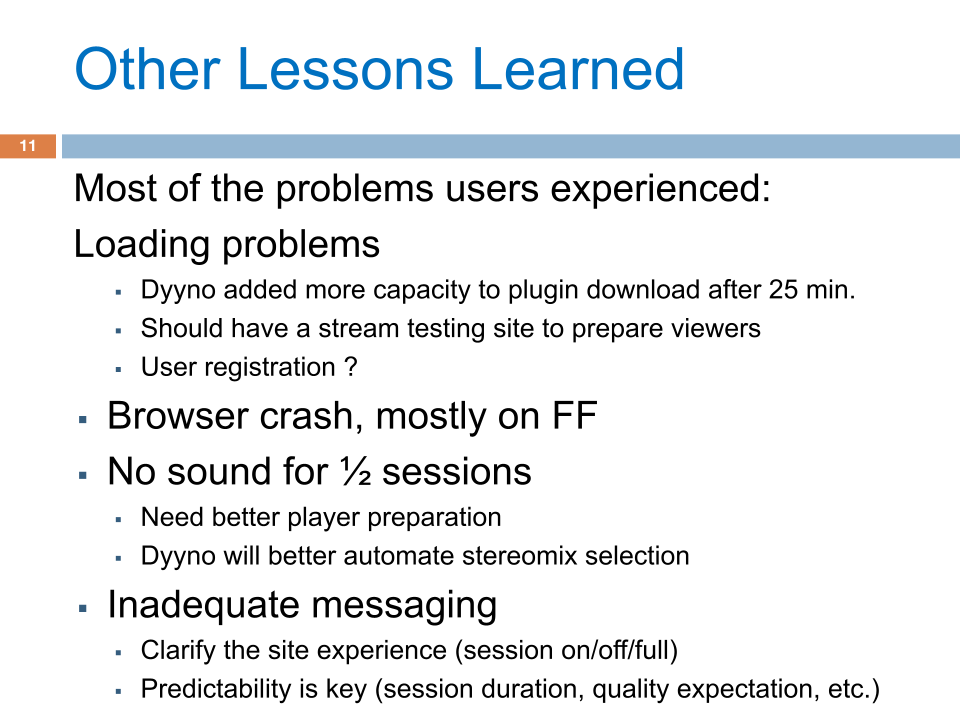
The summary from our technical debrief was honest: “Highly popular event, we want to continue. Room for improvement.” That was an understatement. But the core thesis held: the audience was there. 81% of surveyed viewers said they would use this technology again. They wanted premium content. People wanted to watch live gameplay. The tech just needed to catch up with the demand.
What Did We Get Right?
The insight was simple: people want to watch other people play games, especially when those people are the best in the world. Our raids were world-first progression attempts. The stakes were real. The drama was real. When a boss attempt went wrong at 2% health with 25 people on voice comms, that tension was genuine. The audience showed up because the content was compelling in a way that recorded videos could never replicate.
We also understood that community was the distribution channel. Our viewer surveys showed that most of our audience found us through chat forums and word of mouth. There was no Twitch directory to browse, no algorithm to surface streams, no “recommended channels” sidebar. The community was the platform. If your guild had a reputation, people would find the stream. If it didn’t, no amount of technology would help.
Why Does Being Early in Technology Matter?
Pioneering a technology before the infrastructure exists for it teaches you something that is hard to learn any other way. You develop an instinct for separating “this doesn’t work yet” from “this will never work.” In 2008, live streaming didn’t work well. The quality was low, the tools were primitive, the install friction was terrible. But the audience was there, and their appetite was obvious.
Two years later, Justin.tv spun off its gaming section into Twitch. The rest is history. Xfire eventually declined as Discord and Steam took over the gaming social space. Dyyno’s peer-to-peer streaming approach was overtaken by server-side solutions with better reliability. But the problems we identified in those 2008 debriefs (capacity planning, viewer messaging, audio configuration, install friction) became the exact feature checklist that Twitch and OBS solved on their way to building a billion-dollar industry.
The technical problems we hit were all solved by better infrastructure and the shift to browser-native video. The core product, live high-stakes gaming content watched by an engaged community, was always sound. It just needed time.
Sometimes being early means you have to build the road while driving on it. The debrief documents from those 2008 sessions are still in my files. They are a reminder that every technology platform that seems inevitable today was once a mess of browser crashes, manual stereomix configuration, and engineers adding server capacity twenty-five minutes after launch.
This pattern of building at the frontier before infrastructure catches up is a thread through my career, from live streaming in 2008 to multi-agent AI orchestration and AI agent governance today.

Advisor, founder, and executive producer with 25+ years building technology companies, gaming platforms, and entertainment products. Based in Portugal.